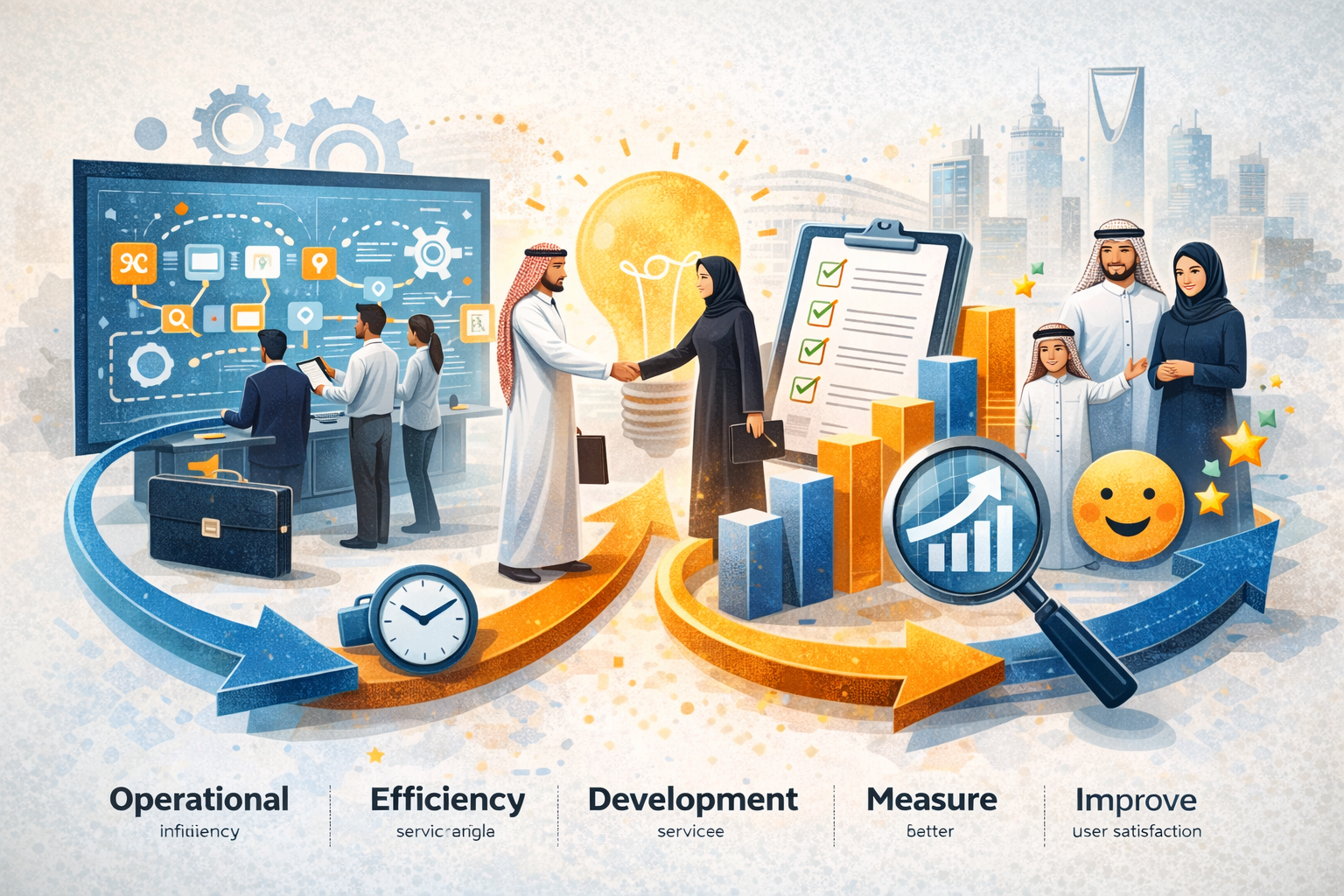

Staff performance evaluation is a foundation of how organisations in Saudi Arabia succeed. Public-sector and private organisations alike depend on it to keep their people effective and to meet the aims of Vision 2030. Job performance evaluation is no longer a routine procedure but a strategic tool for raising productivity and building a culture of achievement. This guide sets out a professional approach suited to the Saudi market.
What job performance evaluation is, and why it matters
Why job performance evaluation is the cornerstone of modern management
Staff performance evaluation is an organised process for measuring how someone is performing against objectives and criteria set in advance. It looks at actual results, professional conduct and reliability, and connects all three to the organisation’s strategic goals.
Applied professionally, it produces fairness at work and builds trust between management and staff. It also brings strengths into view and addresses shortcomings methodically rather than anecdotally.
What this looks like in practice:
A public-sector body that ties performance evaluation to spending-efficiency initiatives gives every administrative team a measurable reason to care about the quality of what they produce, not only its timeliness.
In short
Job performance evaluation is not a formality but a leadership tool that keeps staff performance aligned with the organisation’s goals and supports its stability and development.
Measuring performance scientifically and objectively
How measurement produces accurate decisions
Staff performance evaluation depends on measurement through clear indicators you can actually quantify: productivity, quality of work, meeting deadlines, and how well someone works with others.
Methodical measurement reduces personal bias and turns performance into data that can be analysed and compared. It also lets leaders make fair decisions about promotion, reward and development.
What this looks like in practice:
In retail, measuring staff against both sales and customer experience indicators prevents the obvious failure mode of one improving while the other quietly deteriorates.
In short
Measurement is what fair evaluation is built on, and it turns performance from personal opinion into indicators you can rely on.
The evaluation system and HR governance
What an effective evaluation system contains
The evaluation system is the organisational framework that governs how staff evaluation is carried out, regularly and methodically. It covers setting objectives, defining criteria, choosing the evaluation tools, and the mechanisms for review and feedback.
A clear system standardises evaluation practice across departments and keeps it transparent and consistent. It also supports compliance with internal policy and governance requirements.
What this looks like in practice:
In an industrial setting, running evaluation electronically makes it practical to connect an individual’s performance to safety and production indicators, which a paper process rarely manages.
In short
The evaluation system is the backbone of human resources management, and it is what keeps staff evaluation continuous and fair.
Evaluation forms: ready-made or purpose-built
Choosing a form that suits the organisation
Evaluation forms differ according to the nature of the work and the shape of the organisation. Some organisations use ready-made forms; others prefer to design their own to reflect what their work actually involves.
A form that works is clear, straightforward to use, and covers both the technical and behavioural sides of performance. It should be reviewed regularly so it keeps up with organisational change.
What this looks like in practice:
A hospital using different forms for doctors, nursing staff and administrators gets an evaluation that reflects each role, which is what makes the result worth acting on.
In short
Evaluation forms need to be flexible and suited to the work if the results are going to be realistic and useful.
Performance management as a tool for lasting development
From evaluation to continuous improvement
Performance management goes beyond the periodic evaluation to include planning and continuous follow-up. Staff evaluation identifies training needs, recognises strong performance, and builds clear career paths.
When the process is run professionally, people experience evaluation as support and development rather than only as oversight, which shows in their commitment and their attachment to the organisation.
What this looks like in practice:
Connecting performance management to training plans and recognised professional certification gives an evaluation result a destination, rather than leaving it in a file.
In short
Effective performance management turns evaluation into a principal driver of development and sustained growth.
Frequently asked questions about staff performance evaluation
-
What is staff performance evaluation?
A methodical process for measuring and analysing someone’s performance against defined criteria. -
What is the difference between evaluation and measurement?
Evaluation is the whole analysis; measurement focuses on the numerical indicators within it. -
How often should evaluation be carried out?
Annually or half-yearly, with regular follow-up in between. -
Why does the evaluation system matter?
It keeps evaluation fair, transparent and consistent across the organisation. -
Can evaluation forms be customised?
Yes, and it is better to customise them to the nature of each role. -
How does evaluation support promotion decisions?
Through reliable data that reflects how someone has actually performed. -
What does feedback contribute?
It improves performance and strengthens communication between staff and management. -
Does evaluation affect satisfaction at work?
Yes, when it is applied fairly and clearly. -
How do you avoid bias?
By using clear criteria and one consistent system. -
How does performance management relate to strategic goals?
It connects individual performance to what the organisation is trying to achieve.
Staff performance evaluation is an indispensable strategic tool for building strong, competitive organisations in Saudi Arabia. Applied through a clear system and forms that fit the work, it becomes a genuine lever for improving performance and keeping the organisation sustainable. Start developing your evaluation system today, and make strong performance a lasting part of how you work, with RateHex.