
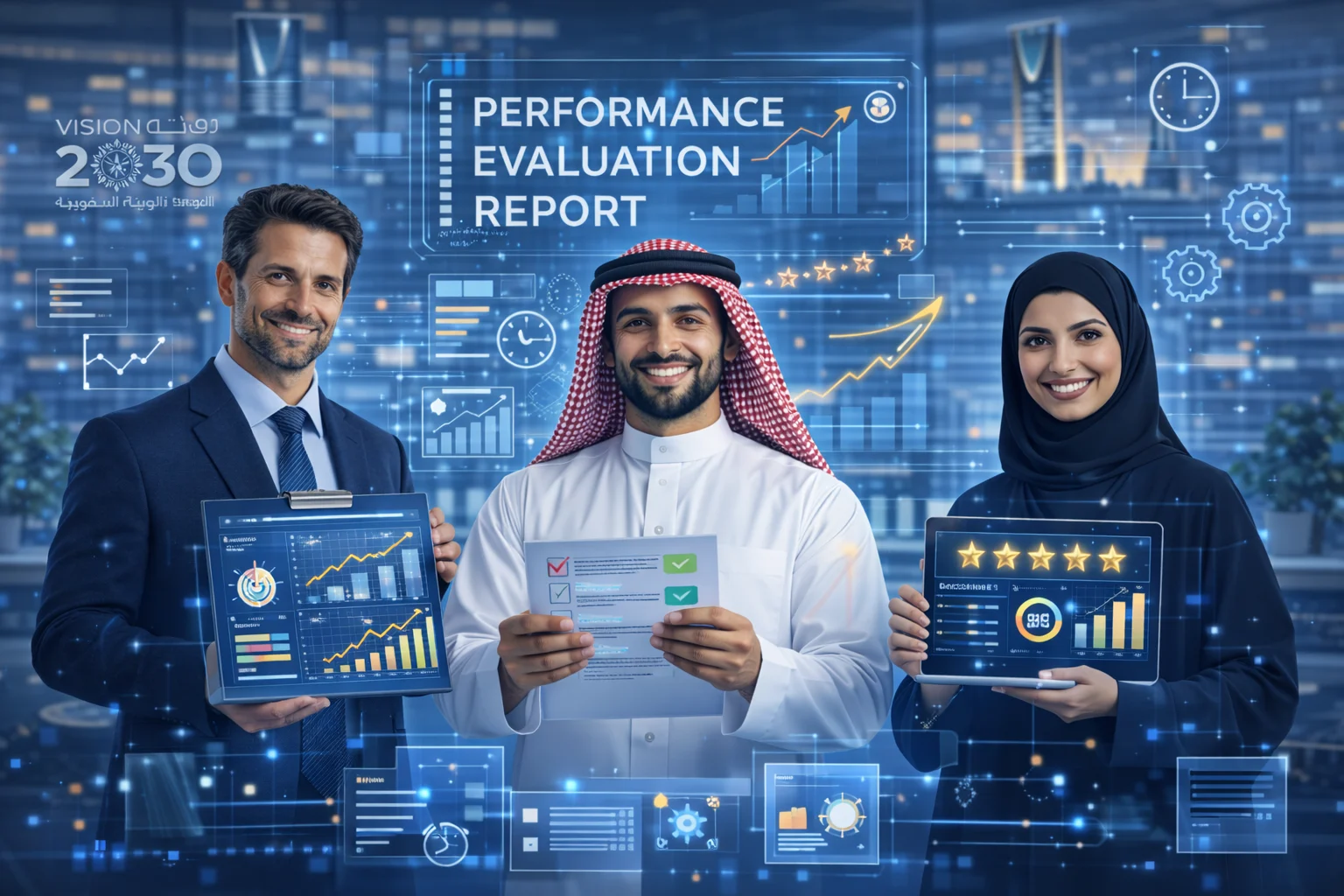
Performance evaluation reports are now a core strategic tool that enables organisations in Saudi Arabia to make accurate decisions based on real data. Reports are no longer just periodic documents; they have become a pivotal element in raising efficiency and aligning individual and organisational performance. When reports are prepared professionally, they become a clear roadmap for continuous improvement.
Performance Evaluation Reports as the Basis for Performance Results Analysis
How Reports Support the Understanding of Performance Results Analysis
The effectiveness of performance evaluation reports depends on their ability to deliver performance results analysis that is clear and actionable. Analysis is not limited to presenting figures; it goes further, to explaining gaps, identifying the reasons for decline or excellence, and linking results to strategic objectives.
Professionally designed performance evaluation reports help turn raw data into practical insights, which help leaders direct resources and correct course before challenges worsen. They also strengthen transparency and support a culture of accountability within the organisation.
Saudi example
A government entity in the housing sector used performance evaluation reports to analyse its annual performance results, which enabled it to identify the departments with low performance and launch development initiatives that raised the rate of organisational achievement within one year.
Summary
Performance results analysis is the real value of performance evaluation reports. The deeper and clearer the analysis, the more accurate the decisions, and the reports move from a monitoring tool to a leadership tool.
Key Performance Indicators and Their Role in the Effectiveness of Reports
Choosing the Right Key Performance Indicators
Strong performance evaluation reports are built on key performance indicators that are directly linked to strategic objectives. Choosing the wrong indicators leads to misleading reports, while accurate indicators reflect reality and support continuous improvement.
Key performance indicators help measure productivity, quality, timeliness and the level of efficiency. When these indicators are unified across departments, performance evaluation reports become a fair and objective means of comparison.
Saudi example
A regulatory authority in Saudi Arabia adopted unified key performance indicators within its performance evaluation reports, which helped raise the level of compliance and bring a tangible improvement in the quality of supervisory reports.
Summary
Key performance indicators are the backbone of performance evaluation reports. When chosen carefully, reports become an accurate mirror that reflects true performance and supports confident decision-making.
The Performance Management System as the Governing Framework for Reports
Integrating Performance Evaluation Reports with the Performance Management System
The performance management system is the framework that ensures the continuity and reliability of performance evaluation reports. Through this system, measurement mechanisms are unified, the frequency of reports is set, and results are linked to development plans.
Integration between the system and the reports helps reduce variation in evaluation, achieve fairness and strengthen governance. It also enables organisations to track performance in real time instead of relying on delayed reports.
Saudi example
A government service entity implemented a digital performance management system linked to its performance evaluation reports, which improved the speed of report preparation and significantly reduced errors.
Summary
The performance management system guarantees the quality of performance evaluation reports. Without a clear governing framework, reports lose their strategic value and become an administrative burden.
Performance Evaluation Reports and Job Competency Assessment
The Role of Reports in Measuring Job Competency Assessment
Performance evaluation reports play a pivotal role in job competency assessment for individuals and teams. They link actual achievement, skill level and adherence to roles and responsibilities.
When reports are used professionally, they become a development tool and not only a tool for holding people to account. They help identify training needs, support fair promotions and motivate employees to improve their performance.
Saudi example
A government educational institution used performance evaluation reports to assess the job competency of its administrative staff, which helped it redistribute tasks and raise the efficiency of internal work.
Summary
Job competency assessment through performance evaluation reports promotes fairness and motivation. Accurate reports create a working environment based on achievement and continuous development.
Tracking Performance Progress Through Periodic Reports
How Reports Support Tracking Performance Progress
Performance evaluation reports enable organisations to track performance progress in the short and long term. By comparing results over time, the impact of initiatives can be measured and the success of improvement plans determined.
This continuous tracking helps embed a performance culture and ensures that results do not slip back after an improvement has been achieved. It also supports a quick response to operational changes.
Saudi example
A service entity in the transport sector adopted quarterly performance evaluation reports to track performance progress, which helped improve service stability and raise beneficiary satisfaction on a sustained basis.
Summary
Tracking performance progress is what gives performance evaluation reports their long-term strategic value. Without tracking, improvement becomes temporary and unsustainable.
Frequently Asked Questions About Performance Evaluation Reports
-
What are performance evaluation reports?
They are analytical reports that measure the level of individual or organisational performance based on defined indicators. -
Why is performance results analysis important in reports?
It helps in understanding the reasons for success or decline and in making accurate corrective decisions. -
How are key performance indicators determined?
By linking them to strategic objectives and ensuring they are measurable and clear. -
Are performance evaluation reports only for employees?
No, they cover individuals, teams and departments, and even overall organisational performance. -
How is the performance management system related to the reports?
The system organises the measurement process and ensures unified criteria and regular reporting. -
How do reports support job competency assessment?
By linking actual performance to skills and responsibilities. -
How often should performance evaluation reports be prepared?
It depends on the nature of the work; they are usually monthly, quarterly or annual. -
Can performance evaluation reports be automated?
Yes, through specialised digital systems that raise accuracy and reduce effort. -
What is the effect of reports on tracking performance progress?
They make it possible to measure continuous improvement and assess the impact of initiatives. -
How do reports contribute to improving overall performance?
By providing reliable data that supports planning and sustainable improvement.
Performance evaluation reports are no longer a traditional tool; they have become an indispensable strategic element for raising efficiency and achieving organisational excellence in Saudi Arabia. When reports are built on clear indicators and integrated with the performance management system, they become a genuine engine for development.
Start today by building professional performance evaluation reports, and let RateHex be your partner in leading performance with confidence and sustainability.




