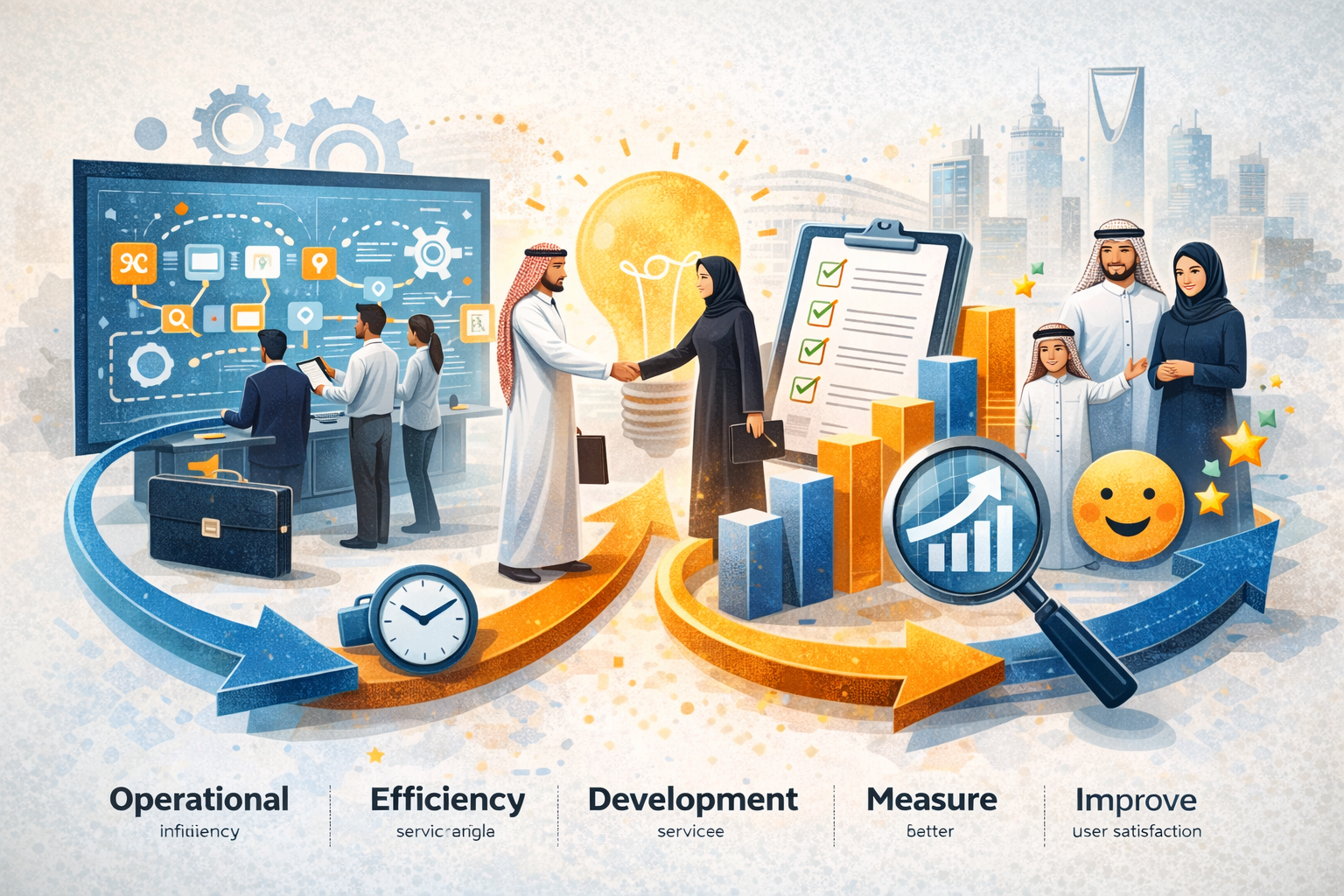

With education in Saudi Arabia developing as quickly as it is, school self-evaluation has become one of the most important tools available to school leaders for assuring the quality of what a school produces and raising the standard of both teachers and pupils. The approach answers the wider move to digital working and modern quality standards, with the aim of building an effective learning environment that runs on data and continuous analysis. Teacher evaluation and measuring how well programmes actually work both strengthen a school’s ability to improve its own performance.
Teacher evaluation and why self-evaluation depends on it
Teacher evaluation is the central element of school self-evaluation: it reflects the quality of teaching practice in the classroom, and how far the school is meeting its academic and pastoral aims. With modern digital tools, evaluation has become more transparent and more objective, which improves teachers’ professional practice and the quality of teaching.
How evaluation develops a school
-
Identifying strengths and training needs.
-
Supporting the planning of development programmes.
-
Improving teaching practice against quality standards.
In short: teacher evaluation provides an accurate base of information that helps a school strengthen its academic performance.
A self-evaluation framework and school performance
A self-evaluation framework reflects a school’s ability to assess itself against clear indicators covering the school environment, academic attainment, pupils’ skills, classroom management and institutional effectiveness. With RateHex, that produces accurate reporting that supports development plans and makes the school easier to run.
What a working self-evaluation framework contains
-
Comprehensive digital evaluation tools.
-
Continuous data collection across teaching activity.
-
Regular review of the operational plan.
In short: the framework is what governs evaluation and turns it into actual improvement.
Raising teaching quality through intelligent analysis
Improving the quality of teaching is a strategic goal for schools in the Kingdom, particularly as education focuses on outcomes and future skills. Analysis tools carry performance indicators that help school leadership examine pupil and teacher results, which is what makes continuous development possible.
What quality improvement rests on
-
Analysing termly assessment results.
-
Reviewing teaching strategies.
-
Bringing technology into teaching.
In short: intelligent tools let a school decide on the basis of how it is actually performing rather than on what it expects.
The school development plan as a strategic framework
A school development plan is the established way of translating the results of self-evaluation into practical programmes the school actually runs. These plans concentrate on raising teaching quality, improving the school environment, and strengthening the partnership between teachers and school management.
What makes a development plan effective
-
Clear objectives that can be measured.
-
A timetable for delivery and follow-up.
-
Performance indicators tied to the self-evaluation.
In short: the development plan connects the school’s educational vision to the results it genuinely achieves.
An educational performance evaluation system and decision-making
As digital working widens, schools increasingly rely on an educational performance evaluation system as the central measurement tool overseen by school leadership, which keeps national standards aligned with how teachers and pupils are actually performing.
How the system supports school performance
-
Tracking academic attainment indicators.
-
Analysing teachers’ performance and classroom practice.
-
Comparing results between classes and year groups.
In short: a digital system helps leaders choose correctly, on accurate and comprehensive data.
Practical strategies for school leaders
Adopting self-evaluation calls for a leadership style that balances oversight with continuous development. School leaders need to build a positive evaluation culture that supports teachers and pupils rather than unsettling them.
Five practices that make self-evaluation work
-
Build a culture of discussion and development inside the school.
-
Review the data monthly, not only at the end of a term.
-
Involve teachers in building the development plans.
-
Use digital tools so evaluation is carried out consistently.
-
Tie evaluation results to the year’s educational objectives.
In short: school leadership that understands this turns self-evaluation into improvement that shows in the school’s results.
Frequently asked questions about school self-evaluation
1. Why does school self-evaluation matter?
It helps school leadership understand the level of performance and make development decisions on accurate data.
2. How does teacher evaluation improve the quality of teaching?
It reveals where teaching can develop and identifies the training that would support it.
3. What is a self-evaluation framework?
A comprehensive framework that measures a school’s performance academically, administratively and pastorally.
4. Does a school development plan differ from one school to another?
Yes. It is built around the school’s needs and the results of its own self-evaluation.
5. What does an educational performance evaluation system provide?
Objective indicators that reflect how pupils and teachers are performing, and that support strategic planning.
School self-evaluation is the cornerstone of improving educational performance in schools across Saudi Arabia. Through teacher evaluation, a self-evaluation framework, quality improvement tools and digital performance evaluation, RateHex lets a school build a clear view founded on accurate data.
Start today towards higher educational quality with RateHex, and build a school environment with a clear view of itself and a real capacity to keep developing.